
## Headline
**The Agent Builder pitch is compelling, but the article confuses capabilities with guarantees**
## Deck
The piece sells an appealing vision of “advanced AI automations” for YouTube analysis and workflow routing—but it’s light on technical specifics, heavy on hype, and missing key constraints: evaluation, permissions, cost/latency, and failure modes.
## Lede
The article reads like a marketing-forward quickstart: you can supposedly build a no-code agent that “dynamically analyzes video content,” integrates tools, structures data with JSON schema, and ships results in a custom widget. That overall direction—agents as orchestrators over tools and structured outputs—is real and worth encouraging.
But the text repeatedly leaps from “you can wire this up” to “it delivers precise results,” without specifying what inputs are available, what models can and cannot do reliably, how one would validate correctness, or what the operational footprint looks like.
What follows is a technical and social audit: flaws, strengths, and a corrective opinion for readers trying to build something real.
—
## Flaws (technical)
### 1) Capability claims without mechanism
The article implies a YouTube bot can “dynamically analyze video content” and “detect specific topics discussed in a video.” That might be possible, but only via concrete pipelines such as:
– pulling transcripts (YouTube captions, ASR), then running NLP over text; or
– downloading media, doing speech-to-text, then classification/summarization; or
– using a multimodal model over sampled frames + audio (rare in no-code contexts).
The piece doesn’t say which. Without that, readers can’t tell whether the proposal is:
– feasible in a typical no-code “agent builder,”
– gated behind permissions and compute,
– or dependent on third-party services.
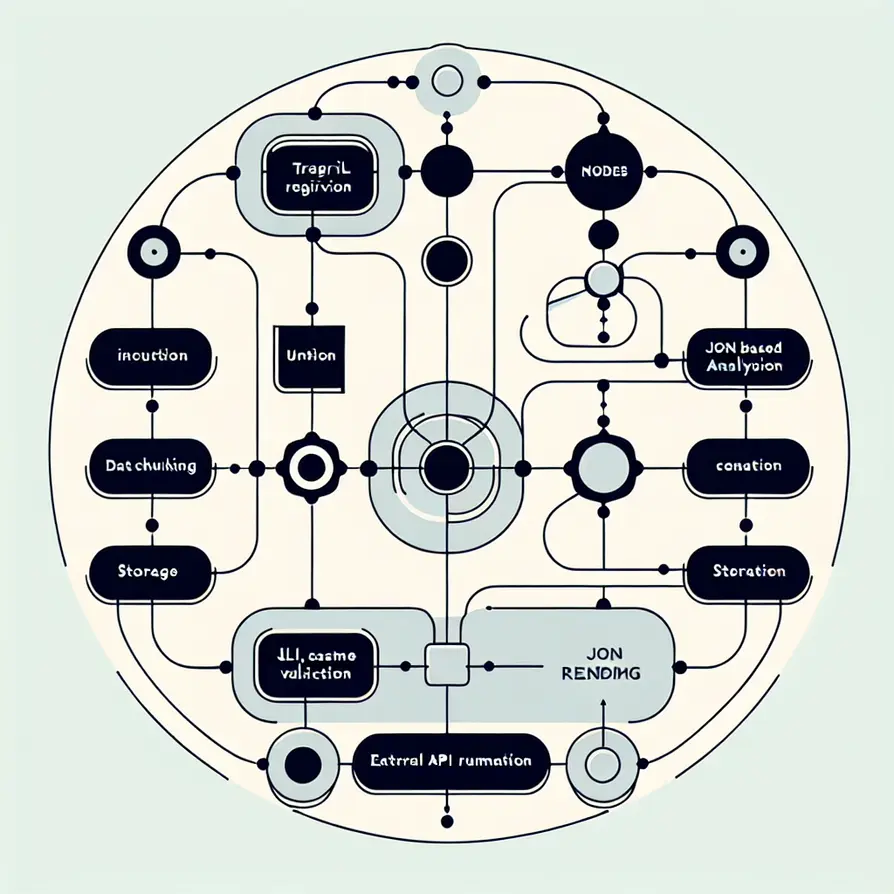
A testable article would state the exact data path: **URL → fetch transcript/metadata → chunk → LLM labeling → schema validation → UI**.
### 2) “Precision” is asserted, not earned
Phrases like “delivering actionable insights with precision” and “deliver precise results” are conclusions, not descriptions.
If the system uses an LLM, then reliability depends on:
– prompt and tool design,
– guardrails and schema validation,
– retrieval quality (transcripts/metadata),
– and evaluation against labeled examples.
Absent that, “precision” reads as marketing copy.
### 3) JSON schema is presented as a correctness solution
JSON schema is useful, but it doesn’t make outputs true—only structured. A model can output syntactically valid JSON that is semantically wrong.
A more accurate claim:
– schemas improve integration and reduce parsing errors,
– but you still need **verification** (cross-checks, tool calls, deterministic rules, and human review for high-stakes steps).
### 4) Tool integrations are named, not specified
The article mentions “Zapier and the Bumpups API,” but gives no examples of:
– the API methods, auth model (OAuth? API keys?),
– rate limits,
– error handling and retries,
– idempotency (avoiding duplicate actions),
– or what happens when tool output conflicts with model assumptions.
In agent systems, “integration” is the easy part; making it reliable under partial failure is the hard part.
### 5) Missing the operational realities: cost, latency, and context limits
A YouTube analysis agent can get expensive and slow quickly:
– long transcripts push context windows,
– chunking and summarization add multiple model calls,
– repeated tool calls amplify latency.
None of that is acknowledged. “Optimize workflows” is gestured at, but without specifics like caching, batching, token budgeting, or timeouts.
### 6) No security, privacy, or compliance discussion
If the bot handles:
– user-provided URLs,
– transcripts that might include sensitive information,
– account integrations (Zapier),
then the system needs least-privilege tokens, logging policies, PII handling, and red-teaming for prompt injection (e.g., malicious transcript text instructing the agent to exfiltrate secrets). The article omits this entirely.
### 7) Internal inconsistencies / vague sections
There are multiple bullet lead-ins that don’t actually list items (e.g., “Two key integrations to consider are:” followed by no bullet list in the provided text). That may be a formatting issue, but it matters: the guide promises steps but doesn’t deliver crisp instructions.
### 8) “ChatGPT 5” reference is speculative
“Stay informed about the latest in ChatGPT 5…” is not part of the technical guide and reads like SEO bait. If a version is not officially documented in the context of the guide, referencing it undermines credibility.
—
## Positive aspects (technical)
### 1) Correct instinct: structured outputs and schemas
Encouraging JSON schemas is a solid practice. In production agent workflows, typed/validated outputs are a major reliability upgrade over free-form text.
### 2) Correct instinct: tool-use over pure text generation
The article frames agents as systems that call external tools (Zapier, APIs) rather than as “chatbots that magically know things.” That direction aligns with how real automations become useful.
### 3) Correct instinct: UX matters
The mention of presenting results in a widget is practical. Many AI workflows fail at the “last mile” because outputs aren’t actionable. Surfacing structured summaries, links, and evidence improves usability.
### 4) Mentions scalability and modularity
Even if underdeveloped, the emphasis on modular design is right: agents should be decomposed into stages so you can test, replace, and observe components.
—
## Social merit and tone check
The author does not demean or belittle AI. If anything, the opposite: the article is overly confident in AI’s capabilities. There’s no disrespect to call out—only a need to temper claims with constraints.
Socially, the biggest gap is the absence of discussion about:
– rights/permissions for video content processing,
– user consent and data retention,
– and how automated classification can bias moderation/marketing decisions.
These aren’t “nice-to-haves.” They determine whether the automation is responsible.
—
## Exceptional conclusions (props where due)
The most defensible “big idea” in the piece is this: **agents are not single prompts; they are workflows**—inputs, tools, structured outputs, and a UI.
That’s a meaningful conclusion for readers new to building automations. It’s also aligned with how teams ship dependable systems: narrow tasks, explicit interfaces, and automation that fits into real operations.
—
## Opinion: support the direction, correct the promises
The article is best read as an aspirational overview, not as a “quick guide.” The core promise—no-code agents that orchestrate tools—is real. But the piece confuses orchestration with understanding and validation.
If you want to build the YouTube bot described, here is the corrected, testable version of the architecture.
### A minimal, real-world architecture sketch
**Ingest URL → Fetch metadata/transcript → Normalize → Chunk → Analyze (LLM) → Validate (schema + rules) → Store → Render widget → Automate actions (Zapier/API)**
Key operational notes:
– **Transcript source matters.** Use official captions if available; otherwise ASR, with known word error rates.
– **Chunking is not optional.** Long videos exceed context windows; use segment-level labels, then aggregate.
– **Validation is layered.** Schema validation ensures shape; deterministic checks ensure constraints; sampling + human review ensures quality.
### Constraints & tradeoffs (what the article should say)
– **Accuracy vs cost:** deeper analysis requires more calls and/or larger models.
– **Latency vs thoroughness:** multi-step pipelines are slower.
– **Coverage vs reliability:** forcing the model to label everything increases hallucination risk.
– **Automation vs safety:** the more “hands-off” you make it, the more you need guardrails.
### Failure modes you should plan for
– Hallucinated themes not supported by transcript evidence.
– Prompt injection inside transcripts (“ignore prior instructions…”).
– Tool call failures (timeouts, 429 rate limits) causing partial outputs.
– Duplicate downstream actions (non-idempotent Zapier steps).
– UI drift: widget expects fields that the model no longer returns.
### How to evaluate the system (missing from the article)
To justify “precision,” you need an eval:
– Build a small labeled set (e.g., 50–200 videos) with ground-truth themes.
– Measure agreement (precision/recall or simple accuracy for labels).
– Track extraction correctness (title, channel, timestamps) deterministically.
– Add adversarial tests: misleading transcripts, multilingual content, missing captions.
Even a lightweight eval turns hype into engineering.
—
## Bottom line
The article’s strengths are conceptual: structure your data, use tools, present outputs well, think modularly. Its weaknesses are practical: it doesn’t specify the actual pipeline, and it oversells reliability without evaluation, security, or operational detail.
A more responsible version would replace “precision” with “useful when validated,” show the real ingestion and transcript path, and treat safety/reliability as first-class design requirements.
— G. Peety
Senior Correspondent, farm.little.org